PC game genres worth trying this year
The PC is home to genres that rarely appear elsewhere in such depth. This overview helps you pick a new style of game that suits your time and temperament.
Why trying a new genre is worth it
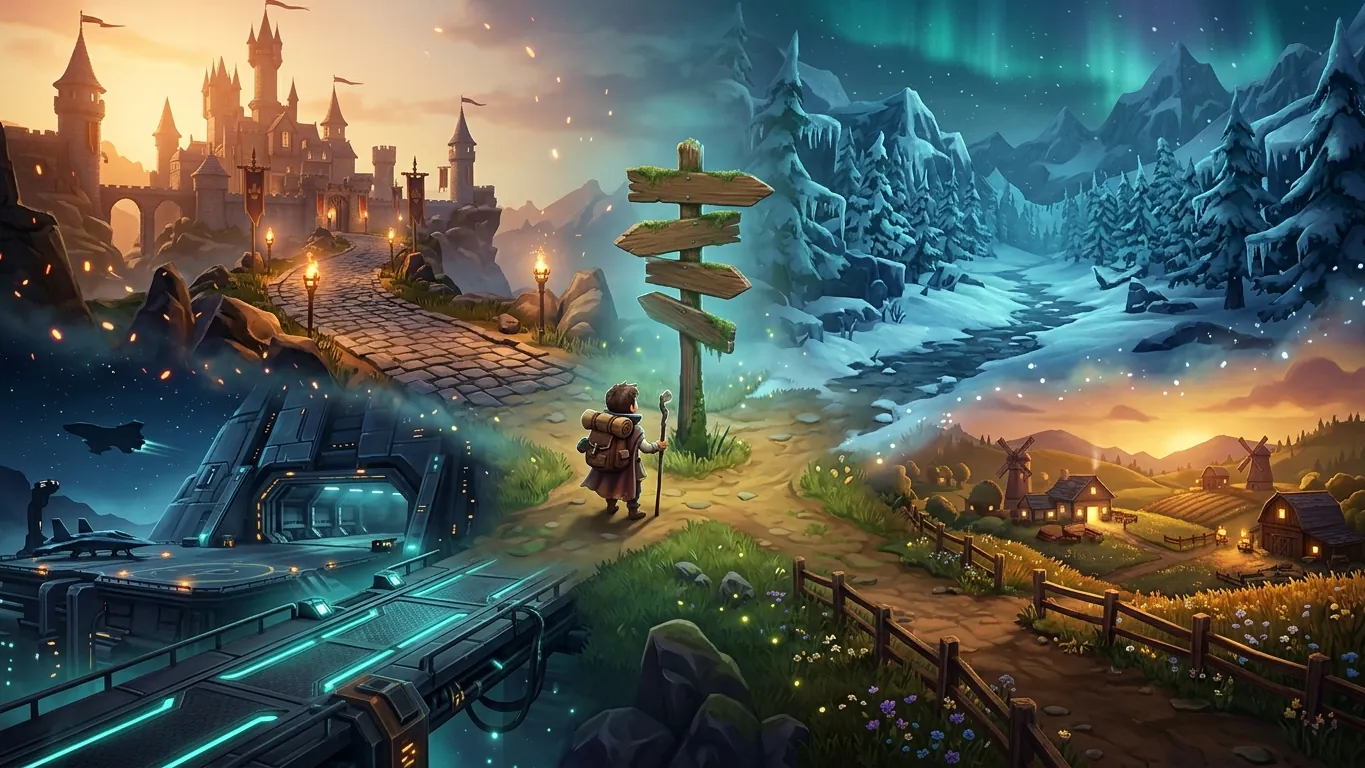
Many players settle into one or two favorite genres and stay there for years. That comfort has its charm, but stepping outside it can be one of the most rewarding things you do as a player. A new genre teaches different skills, presents different kinds of stories and often reveals tastes you did not know you had.
The PC is especially well suited to exploration because so many genres thrive on it. Precise mouse control, flexible settings and a long tradition of mod support mean that strategy, simulation and complex role-playing games have deep roots on the platform. Below are several genres worth sampling, with notes on what each asks of you.
Strategy: thinking several moves ahead
Strategy games ask you to plan, manage resources and anticipate your opponents. Turn-based strategy lets you take as long as you like with each decision, which makes it ideal for thoughtful players or those who play in short bursts. Real-time strategy is faster and demands quick reactions alongside planning.
Grand strategy and city-building games sit at the slower end of the spectrum. They can feel overwhelming at first because of their many systems, but most offer tutorials, and the satisfaction of watching a small settlement grow into a thriving region is hard to match. If you enjoy puzzles or board games, strategy is a natural next step.
Survival and crafting: building from nothing
Survival games place you in a hostile or empty world with very little and ask you to gather materials, craft tools and build shelter. Their appeal lies in steady progress: the first night in a makeshift hut feels very different from the hundredth night in a fortified base you designed yourself.
Many survival games support cooperative play, which makes them a popular choice for friends who want a shared project. Some lean toward tense danger, while others are relaxed and creative. Reading about a game's difficulty options before you start can help you find the tone you prefer.
Role-playing and narrative adventures
Role-playing games let you shape a character and make choices that affect the story. Some focus on tactical combat and detailed character builds, while others put conversation and consequence at the center. If you enjoy novels or long television dramas, a story-rich role-playing game can be deeply absorbing.
Narrative adventures and walking simulators are lighter on mechanics and heavier on atmosphere and storytelling. They are often shorter, which makes them a good way to try something new without a large time commitment.
Simulation and cozy games
Simulation games recreate activities, from running a farm to piloting vehicles or managing a business. Cozy games, a loosely defined but growing category, emphasize calm routines, gentle goals and pleasant art. They can be a welcome contrast to competitive or high-pressure games, and they suit players who want to unwind.
Whichever genre you try, give it a fair chance. The first hour of an unfamiliar genre is often the hardest, because you are still learning its language. Play long enough to understand the core loop, and you will have a much better sense of whether it is for you.
Related articles
 Upscaling and frame generation, explained simply
What upscaling and frame generation do in modern PC games, how they affect image quality and responsiveness, and when it makes sense to turn them on.
Read more
 How to read PC game system requirements
Learn how to read minimum and recommended system requirements for PC games, compare them with your own hardware and avoid common surprises.
Read more
 Early access games: what to know before you dive in
An explainer on early access PC games: how the model works, its benefits and risks, and questions to ask yourself before you decide to join in.
Read more